08033016673, 08033246500, 08100000758 info@adegboruwalaw.com

Login

Username:
Password:

Over 26 Years of Delivering innovative & exceptional legal services

Ebun-Olu Adegboruwa, SAN & Company is a dynamic Law firm of astute legal practitioners experienced in different fields of the Nigerian legal system.

Our firm is recognized for delivering forward thinking legal counsel, combining modern approaches with local insight to help clients seize business opportunities and navigate change with confidence. Sector expertise is central to our success.

Our lawyers possess deep knowledge of the industries in which our clients operate, enabling us to provide comprehensive advice grounded in real world understanding. For our clients, this translates into service enriched with an added dimension of value.

Learn More About Us

Advisory Services

Our firm provides proactive, expert guidance on rights, responsibilities, and liabilities, helping you navigate contracts, reduce risks, and maintain compliance. Whether you’re growing an SME, safeguarding intellectual property, or resolving disputes, our tailored counsels deliver the clarity and confidence needed to make sound legal decisions.

Talk to Us

Litigation

We are renowned for providing clients with valuable solutions to intricate business and legal issues across various areas covering sectors such as banking & finance, intellectual property, tax, real estate, foreign investment, labour law, mergers and acquisitions etc...

Practice areas

Consultation

We are a top law firm known for delivering consistently high-quality legal services across nearly every major area of law.

Contact Us

OMIA EJEWENTOTOR

Senior Counsel

OLUWATOSIN ADESIOYE

Deputy Head of Chambers, Litigation

Media & Insights

Image
Interview

30th April, 2026

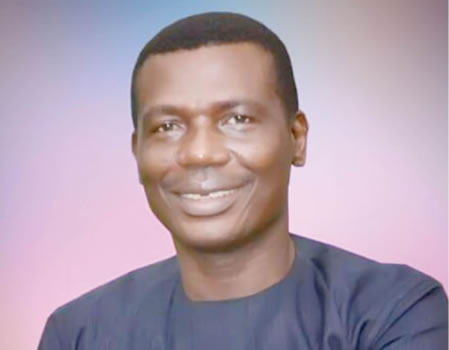
Why I think state pardon is best for Funke Akindele, husband -Adegboruwa, SAN

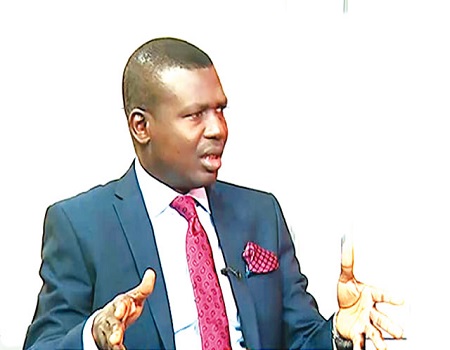
Ebun-Olu Adegboruwa, Nigerian lawyer, Senior Advocate and human rights advocate shares his thoughts, in an e-mail interview with LANRE ADEWOLE, on where the nation, humanity and leadership is headed after COVID-19. Sir, have you reached out to Governor Babajide Sanwo-Olu over the state pardon you are seeking for Funke Akindele and husband, beyond your public advocacy on the matter? I was involved in the case of Mr and Mrs Gbadamosi, which also involved Mr Azeez Fashola, aka Naira Marley. It was a golden opportunity to test the validity of the COVID 19 Regulations in court, but as you very well know by now, the parties decided to explore settlement out of court and I think it was good for them all. It was after the last court proceedings of our case that I made the call upon the Governor of Lagos State to consider a state pardon for the Akindeles and not just the Akindeles but also all the joggers that were arrested on the streets. For the Akindeles, I was moved by compassion for them. No doubt, it was a wrong exercise of discretion on their part to violate the guidelines of WHO, the directives of the President and the Governor, on social distancing, given the seriousness of the COVID 19 pandemic. And I think this is where a lot of people mistook my objection on the issue of restriction of movement. I fully support the measures taken by the government to contain the pandemic, as they are all meant to safeguard our lives. So, in that regard I do not endorse the idea of people gathering to celebrate birthday parties at this time. Indeed, I closed my office as far back as March 23, when I stopped seeing clients physically and I cancelled all our meetings, before we finally closed down on March 27. So, before the Akindeles were arrested, they made a video apologizing for their indiscretion, which I think was genuine. At that point, I believe what the government should have done was to approach them to supply the details of all those who attended the birthday party in order to conduct tests for them and then isolate them, depending on the outcome of the test. We should not always see law as punitive alone but also corrective and reformative. I say this because there were other people who celebrated birthdays in Lagos and even abroad, who also breached the social distancing rule and nothing has happened to them. So, going ahead with the trial of the Akindeles and their subsequent conviction was like an overkill. So, I felt a sense of compassion for them which was what informed my appeal, given that herself and her husband could have explored the same option as we did in our case. It was later in the evening of the same day of my appeal to the Governor on their behalf for a state pardon that I read that they had engaged my good friend, Mr Femi Falana, SAN, to take up an appeal on their behalf. With that knowledge, I could no longer formalize my appeal for pardon since they have decided to test the law on appeal. I support them in this regard as their case is similar to the old case of Aoko v Fagbemi, where a woman was accused of adultery and was charged to court. She pleaded guilty and was sentenced. The late Chief Rotimi Williams, SAN, took up her appeal, contending that the court had no jurisdiction to try her for an offence that was unknown to law. The appeal was allowed. Though I support the Akindeles in their appeal, but I think if a state pardon is granted to them by the Governor even now before the hearing of their appeal in court, it will achieve the same purpose. A day before I made that appeal, the federal government announced amnesty for 2,600 convicts all over the nation. I reasoned that the Lagos State Government could buy into that window and show compassion on the Akindeles since they have shown sufficient remorse for their conduct. All over the world at that time, several countries were decongesting their prisons. For the joggers, it would amount to double jeopardy, for you to be locked down at home, in one spot, eating and accumulating fats and forced into a sedentary lifestyle by reason of COVID 19. So that after you must have survived COVID 19, then you begin to battle other ailments. So, an exercise of the body in this regard should not be taken as a violation of the COVID 19 regulations. All that the government should do is to enforce the social distancing policy by advising the joggers not to mingle together in groups. If the state is wrong according to you, a position shared by your fellow Silk, Mr. Femi Falana, that should also make the conclusion reached by the court, wrong. Why seek a state pardon then, instead of getting a higher court quash the conviction? An appeal for pardon is not inconsistent with the exercise of the rights of the Akindeles to appeal against their convictions. At the time I made the call for their pardon, I was not aware that they had engaged Mr Falana, SAN, for their appeal. And my appeal is not inconsistent with my position that the basis upon which they were tried and convicted was wrong in law. At that time when I made the appeal, they were already convicted by the Magistrate Court and the High Court, where their appeal will be heard, had been shut down and their case did not fall within the exceptions listed for hearing by the Chief Judge. And since no one knows how long the lockdown will last, the tag of ex-convict will keep hanging on them until their appeal is heard and allowed. So, in that regard, an appeal for a State pardon would be the best, because if they are pardoned now, then it will no longer be in their records that they were ever tried or convicted. And I believe the Governor can still exercise his prerogative in this regard, notwithstanding their decision to appeal. AGF Malami was unsparing in his criticism of your criticism of the presidential lockdown of Lagos and Ogun. Is the entire exercise now legal and constitutional, including the renewal on Monday, vis a vis, what is going on between President Trump and some governors in America over who has the power to shut down and reopen sir? My criticism of the President's decision on movement restriction was misunderstood by many. If there is any area in which I have supported this government, it is in respect of the steps taken to contain the COVID 19 pandemic. This is so because anything done to preserve human lives should enjoy the support of all. So, in that regard, I do commend the President and all the Governors and our leaders, for their responses. I have not ceased to praise Governor Sanwoolu and his Commissioner for Health, Prof Akin Abayomi, for their sterling performances in response to the pandemic. Lagos State has actually saved Nigeria, just as it did with the case of Ebola. The point that I made and I am still making is that we should do the right things the right way. You cannot use the Quarantine Act to restrict the movement of citizens, against the Constitution. I was advocating for a law to guide the COVID 19 operations in order to achieve some form of predictability and orderliness, instead of the confusion and arbitrariness that we presently have. We had all the time to do that, as this pandemic started in 2019, that is why it is called COVID 19. And even at the time the President made his broadcast, it was still possible to have a global law that will serve as a guide for the conduct of affairs in this whole matter. Look at what is going on now. COVID 19 itself has claimed about 12 lives, most regrettably, but security operatives have killed not less than twenty persons at the last count, in seeking to enforce the movement restrictions. The Security officers are confused on how to respond to the directives of the President and the Governors, who are all saying different things on the same subject. In Lagos and Abuja, it is total lockdown, in Ogun and some other States, it is partial lockdown. There is directive that markets should open between 10am and 2pm, which in itself is good so that people will not starve to death. But then the big question is how do you get to the market from your house when there is movement restriction? And we use the same police force, the same soldiers and security officers to enforce the different directives. In Ebonyi State for instance, the Governor gave a directive to shoot at sight anyone attempting to escape from the isolation centre! Can you imagine that? Whereas in Kaduna State, a man under isolation wanted to go and pray and it led to a serious battle between him and the security man. So, you can see the confusion all over the land. All that I was saying was that given the way our security agencies work, once you give room for personal discretion and interpretation for a particular policy, then you can be sure that abuse will follow, extortion will follow and even preventable death. And just look at the directives of some of the Governors, some of them gave orders to lock their borders with other States and even with other countries. Where on earth can they exercise such powers? Under the Constitution in section 8 thereof, the issue of boundary of a State is exclusive to the National Assembly and no Governor has the power to regulate on it. Just look at Kogi State for instance, having access to about 6 or 8 other States. How do you lockdown the borders of such a State without violating section 41 of the Constitution which states that all citizens have the right to move in all parts of Nigeria? So, the Governor of Kogi State will give a directive that will restrict my movement to Abuja from Ondo State? That shouldn't be. My second point is that of the concept of separation of powers. In law, at least by section 4 of our Constitution, only the legislature is granted the power to make laws to regulate human conduct. The executive is to enforce the laws and the courts are to interprete the laws. The law-making process is so that the people, through their elected representatives in parliament, are the ones making the laws to govern them, not just that one person will wake up one day and say that almost 40 million people in Lagos and Ogun States and Abuja should be locked down. And this is now being replicated by the Governors in their States without following due process and people are being sent to jail on account of this. As you can see that in Abuja, Lagos and other States, citizens are being arrested and tried and convicted based upon mere directives of the executive. It is not proper. Afterall, the President has been shown to conduct online conferences since the lockdown. Why not explore that option with the National Assembly to come up with a valid law to regulate the general operations of the pandemic instead of relying on personal judgments and feelings to regulate millions of people. So, I believe that the Honourable Attorney-General of the Federation did not give me the opportunity to properly explain my position before his open criticism, as I was not opposing the President for the sake of it but asking that the right thing be done the right way. I know you are a lawyer, but do you think there is reasonability trying to link COVID-19 to G-5 technology and is there any need for Nigeria as a nation to be circumspect in embracing the said controversial technology? I have tried to follow this controversy and I honestly cannot place the connection at all. I mean we always seem to develop some phobia for new things here in our zone initially, only to turn around to embrace it after the rest of the world must have moved on, leaving us behind. We heard these stores of radiation long ago when Satellite dish first came and when we had the technology of mobile phone initially, but today, everyone has one decoder or the other and at least one mobile phone and we are still alive and breathing. We can't continue in that way, of opposing modern trends that have been embraced even in other parts of Africa. Let the 5G or 6G come and then we deal with its consequences the way the other parts of the world are dealing with it. My own view of it is that the government and all the regulatory agencies involved should consult well on it and go ahead and deploy any good development that will contribute to the advancement of the human race. We are all here, so if it will harm us as some people are saying, then we go ahead and adopt what others who have already deployed it are using to preserve their lives and their environment. Personally, I can't wait to have the 5G or 6G, but I also agree with those who are sounding the note of caution for government to the all that is needful for our common protection and preservation. Some state officials told us that the elite class in Eti-Osa LG has been very uncooperative in submitting themselves to test for the virus even when there are reasonable reasons to pull them in for it. The state is yet to make a pronouncement concerning the development. What can the commoners do, not to carry the can? Well, I have read a lot of stories on the social media on this issue but you know one needs to be careful with unverified information that is sourced from the social media. It is a matter that should be investigated by the government and the NCDC and their findings should be made public. You know this is the genesis of COVID 19 in Kano, when the index case checked into a private hospital without disclosing his condition and this has spread and is still spreading in that State. The general understanding that we all have is that testing and treatment for COVID 19 are to be centralized but it is not impossible to have cases of abuse or non-compliance but as we speak, there is no law barring anyone from seeking private treatment to preserve his own life because the Constitution in section 33 grants the right to life to every citizen. And it goes back to the points that I have laboured to make that we should have law to regulate the pandemic so that everyone is sure of what to do and what not to do and the consequences to follow. The challenge however is that some Nigerians take this infection as some kind of stigma whereas others have been very bold and helpful with their situations, like Governors Bala Mohammed of Bauchi State, El-Rufai of Kaduna State and Seyi Makinde of Oyo State. The testimony of Governor Makinde of how he battled the infection has helped a lot of people and has given so many people hope that the pandemic is not a death sentence. I also listened to the story of the Chief Medical Director of the University Teaching Hospital, Ibadan, being a doctor himself, openly admitting his infection and telling us how he fought it and what we can all do not to be infected and then treatment upon infection. I actually think the government can do a lot to publicize such cases so that many can get out the phobia that COVID 19 seemed to have imposed on them. So, all the so-called big men who are infected but are concealing it are only saying two things; first that they must have strayed to where they should not and they are not proud of their actions or that they do not care about the fate of their family members and their care givers who are being exposed. But like I said, it is only a rumour and we cannot judge people based upon information that is not verified or substantiated. But having said that, it is for government to investigate it, because of the danger posed to their care givers who may not have been properly trained for such sensitive treatment, and even their families and their loved ones. The reason for their isolation is to stop them from infecting others and thereby spreading the disease. It shouldn't be difficult for the government to secure the details of all travelers through the airlines. There is no mystery in this at all. But the option for the rest of us is to lie low and continue to observe the rules of personal hygiene and social distancing until such a time that God has intervened to defeat this monster. The cash-by-hand palliative strategy of the federal and state governments has rankled to no end, considering reports from places like Gombe, Katsina, Kwara et al, that beneficiaries are being under-paid. Even Tinubu subtly kicked against the practice. What model can we adopt to cut out wheel-dealing middlemen and corrupt government officials sir? As is common with our affairs, a lot of abuse have trailed this policy, especially as it involves the disbursement of funds. Some days ago, I read that the federal government terminated the contract of some of the entities engaged for the disbursement. That itself should tell you a lot about the corruption of that payment regime. But this does not detract from the good intention behind the policy, which deserves commendation. It is the implementation that seems to have some issues. Preferably, investment of funds in food at this time, should be the primary concern of the government. Money is good but it becomes useless when it has no value. What can you truly buy with N20,000 in the present-day Nigeria, where even common tomato is regulated by the exchange rate? We should give food and other essential commodities to the indigent, the aged, widows, the unemployed and the vulnerable ones amongst us. Even if they steal the food, it will still end up in the stomach of somebody. It is easier to divert raw cash and the temptation is so very high, at this time. I recommend that the government should involve recognized faith-based organisations, market associations, community-based associations, etc, for effective distribution. A lot of people have contested the data upon which the present disbursement is based, especially as it seems to discriminate against certain sections of the nation. Furthermore, since it is a measure meant to cushion the effect of the lockdown, it should be concentrated more in the areas where movement is restricted and people have no access to do their normal business. That is when it becomes a palliative, meant to cushion the effects of the anomaly. Have you been tested sir? I have not been tested for COVID 19 but I'm at home with my family observing the lockdown and all the directives of government. Even though I have my reservations on the mode of the directive, I have advocated compliance nonetheless, as a law-abiding citizen. I don't know the modality of the testing yet but from what I've read in the news, if Eti-Osa where I'm based has 85% of the total figure of those tested already, I expect that by now, we should have many of us in this area tested, but may be it is a matter of time. But I'm here with my family and we are all fine and well by the grace of God, but whenever the government gets to us for testing, we are all ready and willing to cooperate with that regime, for our own good and for the good of all. It is very important that the testing mechanism is accelerated because that will most probably determine how long this lockdown will last. Yesterday, I watched in the news when the United Kingdom stated that the test rate presently is 100,000 tests per day. That should be our target, even as we are praying for God's mercy so that it can end on time, as it will not be too good to remain idle for a long time. And the other concern is that the rainy season is at hand. Our people may not be able to cope with flood and pandemic all at the same time. But I know that the challenge is huge for the government, which is why we have all been commending our leaders in this regard and giving them all the support that is needed. Part of that support is the payment of tax by all citizens, so that the government can do more and we will have the locus to hold them accountable. While staying at home with empty stomach, criminals are still not allowing residents of Lagos some peace. Isn't something dark looming, considering the people might revolt and call the bluff of the restriction regulations? I'm personally shocked to see that there are still so many cult gangs in Lagos State, with such boldness and alacrity. With the resources available to this State, there is no reason we should be under the reign of cultists. There is a security trust fund to which handsome donations have been made, there is a huge IGR mechanism, in taxes, levies, fines, land use charges, toll fees on two major roads, federal allocation, oil allocation, etc. There is already an existing Neighbourhood Security outfit, which should work together with the police for intelligence gathering as a matter of policy. Then there is the community policing initiative, which should also be harnessed. When we get to the situation where you can't even go out during the day in Lekki Phase 1 to withdraw money from the ATM, then it is serious. But the fundamental truth is that the youths are unemployed and unengaged and being young people with energy, they will become preys in the hands of whosoever is able to engage them, for good or for bad. So, the solution is employment. The other point for Lagos State in particular is to de-emphasize the use of thugs during elections, because after the elections and there is nothing to do, these thugs will turn to criminals. Since we don't know how long this lockdown will last, it is important to look at making the issue of palliatives more transparent and sustainable so that it will really get to those who need them and that may help to reduce the unrest. But beyond this, Lagos State should be innovative in the implementation of the lockdown regime. I mean you can't lockdown an economy so huge as Lagos State for so long. We should begin to relax the lockdown in phases as from next week, or else things may get out of hand. What existential lessons should COVID-19 be teaching our leaders and even the led vis-a-vis the right kind of leadership? Those rejected politicians' bread as palliative, should hold some significance, I believe. For the first time in the history of Nigeria, our leaders are confronted with their own wickedness, ineptitude, carelessness and wanton corruption, in just acquiring money for their own personal benefits without investing in social infrastructure. Who would have thought that all our billionaires will be forced to use our local hospitals? To imagine people with all the money but no means to travel, such that the money becomes totally useless. It only means that the real substance of a person does not consist in the abundance of the things that he possesses but rather in how he's able to impact others. This whole world is just vanity upon vanity, after all. We should now begin to invest in our infrastructure, especially the hospitals, to equip them and make them useful for the good of all because one day, even the President's life may depend on it. The other point is the vanity of human existence without a relationship with God. This COVID 19 pandemic has just demonstrated the need for everyone to be closer to God as no one can ever determine how and when God would require you to give account of your life here on earth. So, we should always approach life with the thought of godliness and doing good to others. We should be considerate to others and be willing to share at all times. It doesn't have to be something big, but at least we should reach out to those who are vulnerable and in need. That is part of the lessons of this lockdown, namely that money is valueless if it is not impacting others one way or the other. Otherwise, the money is just in the bank wasting and depreciating. You can't go out, you can't work, there is limit on what you can even spend and even at that, you are not too sure of life to spend it. This is why the Bible is true as ever that a living dog is better than a dead lion. But I am sure that this whole pandemic will go, with God on our side and our leaders doing it right.


Image
Learned Expression

30th April, 2026

Abanobi V the state and the evil of kidnapping (1)

INTRODUCTION According to the learned authors of Black's Law Dictionary, kidnapping is "the crime of seizing and taking away a person by force or fraud, often with a demand for ransom (also manstealing)." For Collins English Dictionary, to kidnap is "to carry off and hold (a person), usually for ransom". This is corroborated by the learned authors of Jowitt's Dictionary of English Law as "the forcible abduction or stealing away of a person, whether a man, woman, or child. It is an offence punishable at common law by fine and imprisonment. Morally speaking, it is wrong to steal anything, how much less a human being. In the ordinary course of events, the law frowns at the intent to take away something with the hope of depriving the owner thereof its permanent use. To kidnap a person therefore connotes that the kidnapper intends to deprive the victim of the use of his or her life, which is why the law places the offence of kidnapping in the same status as murder, with some statutes prescribing the maximum penalty of death. When a 98-year-old great-grandmother is kidnapped, then there should be no remedy for the felon, because such a gruesome act borders on irredeemable depravity. There can be no justification for this heinous display of wickedness by the appellant and his gang, although I am well aware of the challenges faced by citizens in our present dispensation, especially the youth. No matter the difficulties that people face or contend with, it cannot ground the seizure or theft of an old woman, subjecting her to such a traumatic experience of keeping her in the trunk of a car, with all the inconveniences and dangers to her life and safety. But for the police and the act of divine intervention, the poor woman would most probably have died from exhaustion and suffocation even before the criminals got to their evil destination. I join the call upon the government to do more in job creation and youth empowerment, but the youth too must embrace contentment, diligence and believe in honest endeavours as the surest means of lasting prosperity and human survival, and stop chasing miracle money and exploring shortcut options to attain sudden wealth. THE FACTS OF THE CASE The facts of this case are as reported in Abanobi v The State (2026) 5 NWLR (Pt.2037) 587. The appellant, acting in concert with his co-accused on 26th October 2014, kidnapped and took hostage one Madam Lydia Acho, a woman of 98 years old. She was purportedly abducted from her residence in Isuikwuato Local Government Area in Abia State. However, she was subsequently rescued on the same day within Ikuwano Local Government Area in Abia State following a car chase by the police. The appellant and the 2nd accused person were later apprehended at the locus criminis with the appellant having sustained gunshot wounds. PW2, during her testimony, left the witness box to identify the appellant and the co-accused person in the dock. Under cross-examination, she stated that she was able to identify the appellant and his co-accused by the illumination from a flashlight. The police officer who led the patrol team that accosted the appellant and his co-marauders and rescued the victim testified as PW4. He gave evidence of how the appellant and the co-marauders were accosted by the patrol team while inside a Peugeot 406 wagon vehicle with which the victim was kidnapped. The driver of the vehicle lost control and rammed it into a tree and the occupants, including the appellant ran into the surrounding bushes. The police shot at the occupants of the vehicle while they were trying to escape and noticed blood at the scene. Upon approaching the vehicle, the police rescued the victim from the boot of the vehicle and took her to the hospital. With the help of the community vigilantes, the appellant, with a bullet wound, and the 2nd accused person were arrested from the bush. The appellant's two phone handsets were recovered from the vehicle. Following his apprehension, the appellant made a statement to the police, exhibit "B", and was the sole witness in his defence. His story was that he too was kidnapped by the two passengers he carried in the Peugeot wagon on his way from his village in Anambra State to Aba. He admitted that he was in the vehicle with which the victim was kidnapped and taken away. He was there when the police led by PW4 accosted them, the vehicle rammed into a tree, the police shot at them and he bolted and ran inside the bush and slept there till the following morning for his safety. He further testified that on the following morning he came out from his purported concealment within the bush with the aim of reporting the incident of kidnapping at the police station. However, contrary to his alleged intention, he was instead apprehended by the police and subsequently charged with the very act of kidnapping he intended to report. He stated that he was released by the fleeing kidnappers amidst a barrage of gunfire, one of which hit him. However, in his extra-judicial statement, he claimed that he remained in the trunk of the car while one of the two alleged hijackers stood guard over him. At the conclusion of trial, the trial court in its judgment convicted the appellant and sentenced him to death for the offence of kidnapping contrary to section 3(a) of the Prohibition of Terrorism, Kidnapping, Hostage-Taking, Use of Offensive Weapons or Explosives and Other Threatening Behaviour Law No. 10 of Abia State, 2009. Dissatisfied, the appellant appealed to the Court of Appeal which affirmed the judgment of the trial court and dismissed his appeal. Still dissatisfied, the appellant appealed to the Supreme Court where he contended that the respondent failed to prove the offence charged as there was no evidence that he kidnapped the victim for the purpose of payment of ransom. In determining the appeal with final dismissal, the Supreme Court considered the provision of section 3(a) of the Prohibition of Terrorism, Kidnapping, Hostage-Taking, Use of Offensive Weapons or Explosives and Other Threatening Behaviour Law, No. 10 of Abia State, 2009, which states as follows: "3(a) Any person who, for the purpose of payment of ransom, kidnaps and takes another hostage is guilty of an offence." What constitutes offence of kidnapping: Section 3(a) of the Prohibition of Terrorism, Kidnapping, Hostage-Taking, Use of Offensive Weapons or Explosives and Other Threatening Behaviour Law No. 10 of Abia State, 2009 stipulates that any person who, for the purpose of payment of ransom, kidnaps and takes another person hostage is guilty of an offence. The section suggests an acknowledgment of the distinction between the offence of kidnapping as understood within broader legal jurisprudence and the specific instance contemplated under that legislation where the element of "for purposes of payment of ransom" is expressly incorporated as a necessary and constituent element for establishing guilt. The distinction is pertinent when considering the general principles governing the offence of kidnapping. What Constitutes Offence of Kidnapping: Section 3(a) of the Prohibition of Terrorism, Kidnapping, Hostage-Taking, Use of Offensive Weapons or Explosives and Other Threatening Behaviour Law No. 10 of Abia State, 2009, prescribes that the kidnapping and taking another hostage must have been actuated by the intention to ask for or for the purposes of payment of ransom. It does not provide that for the offence of kidnapping to be complete, the ransom must have been paid. It only prescribes manifestation of an intention by the abductor to demand or obtain payment of ransom. What this postulates is that where the definition of kidnapping includes abduction for some specific purpose, the mens rea that the prosecution must prove in order to obtain a conviction must include the specific purpose. Therefore, it is not enough to prove that the defendant intended to abduct the victim. In order to secure a conviction of the defendant, the prosecution must prove that the defendant abducted the victim with the specific intention of obtaining payment of ransom. There must be an indication on the part of the defendant of trying to obtain an advantage or holding the victim for ransom. The prosecution has to prove beyond reasonable doubt that the accused intended to detain the alleged victim in order to demand and obtain a sum of money for the alleged victim"s release. It does not matter whether the defendant in fact demanded money or whether the defendant succeeded in obtaining any money. There must be some overt act manifesting that intention. In the instant case, it was clear that the intention of the appellant and his co-accused was to kidnap and take the victim for the purpose of payment of ransom. Contrary to the appellant's submission, both the trial court and the Court of Appeal did not speculate on whether the victim was kidnapped for the purpose of ransom. The intention of the appellant and his co-accused person to demand ransom could be inferred from their conduct, given the overall circumstances of the case. The ingredients of the offence were established against the appellant. The Probable Motivations for Kidnapping: The jurisprudence of the offence of kidnapping extends beyond instances solely motivated by demand for payment of ransom. Criminals take hostages as a shield to help them escape from the scene of a crime. In addition, kidnapping could also be motivated by personal grudges.

Image

30th April, 2026

My mother died during child birth when I was in primary five -Adegboruwa SAN

From your summary on the social media, people are already talking of what an awesome life journey you have had, to this point. But you said that was a scratch. We will love the details. I had a very humble beginning, born in the riverine setting of Ode-Etikan in Ilaje Local Government Area of Ondo State. At that time, there was nothing like cars, motorcycles or any other motorised mode of transportation. The best we had was the outboard engine, which was used only for fishing in the ocean. Later on, the government engaged Westminster Dredging Company to dredge a canal to pass through the entire local government area. So, I was not exposed to any form of development and had no opportunity to experience life in its fullest. But I fully remember that my parents, especially my mother, loved education, as the education supervisors used to stay in our house and my parents were always urging me to watch them by sitting by their tables. And God helped me that I was very brilliant in my primary school days. My father was a founder of a church and he was also involved in large scale farming. So, we used to accompany him to the farm by trekking long distances and then come back together to continue schooling. I remember that one day my mother was brought from the farm to the church for prayers. She was very weak and weary, looking very frail. I didn't know she was in labour. That continued for two days. I was asked to go and join my grandmother in another village. All I got to know later on was that she was being taken to the local government headquarters in Igbokoda for treatment. It was much later that I got to know that she had passed on. It was a very painful moment for me, especially as I didn't get to see her in her days of severe pain. The child in her womb also died. She was being conveyed in a local canoe and she died on the way. I was in primary five or so at the time and it became an issue in the house as my step mother became very hostile and uncaring. She would starve me of food, compel me to do very tedious menial jobs in the house, even though her children were much younger than me and then she was never satisfied with anything that I did and was inciting my father against me to hate me. I couldn't take it any longer so one night I ran away from the house, far into the forest. My wish then was that I would run into some wild animal that would just devour me so I could just end life. Unknown to me, my father had roused up the entire village to constitute a search party for me. Local hunters and farmers were all mobilised to search me out but I had gone very far into the forest so they couldn't locate me. An idea cropped into their mind in the village to use the huge bell of the Anglican Church, which they were ringing intermittently. It was the sound of the bell that I followed and was able to come back home because at that time I was already lost and starving in the thick forest. But the persecution continued and even increased. My aunties came to my father and sought his permission to take away my younger sister to go and be living with my grandmother in another village and my younger brother was also taken away by one of my aunties. But my father would not release me, being the first born of my mother. One particular night, I decided to end it all. My father also had many fish ponds at the back of our compound. Around midnight of that day, I ran into one of the fish ponds to drown deliberately. So, I started guzzling mud water just so that I may die. I didn't know what happened thereafter. I woke in a hospital where I had been unconscious for seven days. My father stayed with me throughout because at this time, my aunties had raised the alarm to hold him responsible for any harm that may befall me. Based on the persecution that I was facing at home, my father decided to take me to a boarding house, far away from home, for my secondary education. I was too young for that experience and he just sort of dumped me there. All my provisions and necessaries were confiscated by my seniors and I was left with only my toothpaste which I reserved for licking in order to get my tommy to protrude and avoid starvation. I could not cope really, so I had to find a way to survive. I joined a cart-pushing company and overtime, I dropped out of school and left boarding house to be staying with the owner of the company. I did this for about one year and had actually forgotten the idea of schooling as I had mastered the art of manual truck-pushing. We were transporting local gin for export to Lagos. So once in a while I joined in the drinking and eventually became wild and very rascally. It was one of my townsmen who saw me in this condition that went back home to tell my father my plight. My father came and took me home and registered me in another school to complete my secondary education. At this time, my step mother could no longer oppress me as before but we were not on very good terms and my father noticed it, so after my SSCE exams, he sent me to his younger brother in Lagos for further studies. Now my uncle was a timber dealer so I joined him in the timber business and I did that for about five years. We adopted a boundary town between Ondo and Edo States, called Owan, as our base. From there we would travel by boat to Ofenitebe, a village in Edo State on the opposite side of the Ogbese River. From there, we go into the forest in search of timber logs. During the dry season, we cut the logs and then dig very deep trenches near them, so that when the rain starts falling, we drag the logs manually to the Ogbese River. Ogbese is a narrow flowing river with very fast current. So, each of us will take charge of one log at a time, to row it with manual poles and guide it along the current. It takes about a month's journey to get to Nikrogha, which was then our terminal for manual rowing. At Nikrogha, we would then assemble all the logs and raft them together with strong wires. Then tug boats would come from Lagos to hook the logs and tow them to Lagos. At Nikrogha, we then build houses with palm leaves, make local beds on top of the logs, to journey to Lagos. It takes about three months to get to Lagos. The challenge is when the logs scatter, especially in deep waters after Epe, as we had to come through the Atlantic Ocean enroute the Lagos Lagoon and then stop at Okobaba Foreshore in Ebute-Metta in Lagos. You wake up at times with snakes under your bed and you are there in the rain and in the sunshine. Your major task is to protect the logs and keep them intact till we get to Lagos. I was adopted as the official cook of the team so I had additional task apart from logging. I was also the secretary, taking down notes and the number of logs. But in all of this, my mind did not depart from education as I didn't think I was born to be a timber man. So what I did was to buy textbooks and keep faith with my studies even though I had no idea of how it would end. Having worked for about five years, I indicated to my uncle that I wanted to further my education. So, I gathered money from my pocket money and borrowing from a friend to register for the GCE exam, which I took and passed. I then also enrolled for JAMB and passed and was offered admission to study law at the Obafemi Awolowo University (OAU) Ile Ife. At this point, my uncle had fallen in love with me totally as he loved lawyers and I was the first person in the family to venture into that field. Your story is already inspiring a lot of people. Was there any point in the past that it looked as if today, would not be, when you felt like walking away from your dreams and destiny? Surely I had so many discouraging moments in my life journey, especially in my early childhood days. But what I see in it all is that if God has destined you for a particular thing, you will surely get there. Looking back now, all that I went through was actually to prepare me for where I am presently in my career and ministry. It couldn't have been so sweet should I have walked through it all so freely and smoothly. The joy I feel presently is in looking back at it all and realising that in spite of all that I went through, I am still here. What that means then is that no matter what is happening to you, as long as you are still breathing, don't give up. For someone with your background, one would expect a quiet, please-let-no-one-notice-me-here kind of life at Ife. But no, it was Big Sam, Big Sam everywhere. Why did you choose to behave like that proverbial fellow who wakes up everyday seeking to be killed, considering that the history of student activism is replete with abrupt termination of academic careers and disruption of future plans? I didn't just choose to be an activist in my university days in Ife. Two things I can now recall accounted for this. First is the influence of Professor Dipo Fashina, Jingo as we used to call him then. He was then teaching Year One students Philosophy and there is no way you would sit under that man for two lectures in a row without getting infected with his zeal and doctrines. The other factor was my Uncle. He was a lover of justice, equity and fairness. He confronted the authorities constantly, especially the Forest Guards and I witnessed many of these confrontations. Activism was then my natural inclination. Also at that time, student activists in Ife were naturally Marxists, with very austere lifestyle, always appearing moderate, most times adorned in very cheap outfits and even slippers. So, my financial handicap perfectly fitted into that scenario and it was only natural that I go where I could function properly. I also then discovered that I had passion for activism and I blended quite easily into that fold whilst in Ife. Beyond expulsion, reinstatement, persecution et al, what other cost(s) did you pay for what many took to be your extreme student activism, particularly in the hand of the Federal Government and fellow students, who were saboteurs. I was elected PRO of the OAU Students' Union in my second year in the university. Ife was then considered the headquarters of students' activism in Nigeria, so we led the protests against the IMF loan that was being proposed by the Federal Government then. This led to the closure of the university and a panel was set up to try many of the student leaders, at the end of which 61 of us were summarily expelled from the university. It was a very challenging time in my life. I mean having regard to all that I had gone through in life, I should not be the one involved in any protest that could lead to my expulsion. So I couldn't go back home to tell my people. Thank God that Chief Gani Fawehinmi, SAN came to our rescue by filing a case in court through which he secured our re-instatement. By this time, I had become totally immersed in students' union activism and in my third year, I was elected President of the union, which didn't go down well with the Dean of my faculty. He called me, Bamidele Aturu and Nurudeen Ogbara and told us to choose between the Faculty of Law and students union, saying that lawyers should not be involved in students' protests. We didn't take him seriously at the time but he also didn't take it kindly with us, especially me, being the leader of the students. He was taking us Land Law and at the end of the examinations, I got an F in Land Law, meaning I had to repeat the class whilst my mates proceeded to the final year. I took it in my strides and joined my juniors in year three and had actually settled down to write the first semester exams for year three. Unknown to me, Mr Ogbara and some comrade lecturers had petitioned the Senate and requested for external examiners to mark my Land Law scripts. It took a long and tedious process but at the end of the day, I passed that same course and I was allowed to join my mates in the second semester of final year, very close to the examinations, which I took and passed and was cleared to proceed to the Law School. At the Law School, I and Aturu and Ogbara were denied admission based on a petition from the University that we led student protests. Gani again came to our rescue and ensured that we were admitted into the Law School. As the President of the Students Union, I was an automatic member of the Senate of the National Association of Nigerian Students, NANS and we had cause to travel to the University of Nigeria, Enugu campus for our Senate meeting. We were arrested and detained for about two weeks and released later. Also as a student leader, I had cause to work with Dr Beko Ransome-Kuti and Chima Ubani at the headquarters of Campaign for Democracy in Anthony Village, which truly exposed me to a lot of things within the human rights community. In Ebute-Metta, Dr. Osagie Obayuwana had set up the Mainland Progressive Youths Movement, MPYM, which was a grassroots mobilisation outfit for progressive-minded persons resident in the Mainland area. So, whether in school or at home, I had no choice but to be an activist. When the June 12 matter came, it was natural to gravitate towards the movement for the resistance of the annulment of that popular election. So we declared a day of national protest, starting from Kano Street in Ebute-Metta to Herbert Macaulay, to Ikorodu Road and to Government Secretariat in Ikeja to deliver a letter to the Governor, for the President. On Iyalaro Bridge at Ojota, the police ambushed us, shooting tear gas and live bullets into our midst. I was arrested with Chima Ubani and others and taken to the notorious Area F Command, Ikeja and thereafter charged to court for conduct likely to cause breach of the peace and unlawful assembly. Gani defended us. Will I be correct to say your law school studentship phase, was the "quiet time" of your transition from being a student activist to human rights crusader, because I personally believe there are different methodologies to the two. In the Law School, there was no opportunity for student unionism, as we were bombarded left right and centre with academic work. I also had to prove to my persecutors that I was not a dull brain. So, I buried myself in my academics fully and was able to graduate in the second-class upper division. It was a period of rest from activism as for the whole year, I never truly got involved in anything outside my course of study. Everyone was eager to graduate and become a lawyer. The other issue was that we were mingling with students from other universities and without any forum for student unionism, there was little or nothing that an individual could do to effect a radical change from the status quo there. Buhari meets Ramaphosa, condemns attacks on Nigerians, other nationals Gani was a major factor in your life, like a God-send, intervening at different critical and crucial stages of your career formation, through school. What is his memory to you and do you personally think he should have left his chambers behind for the benefits of generations, instead of ordering its dismantling after his death? Chief Gani Fawehinmi, SAN, was my leader, mentor and benefactor. At various critical points of my life, he rescued my career. I believe he was God-sent. But for his courageous intervention, my studentship had been terminated by the university authorities in OAU. But for Gani, I would not have been admitted into the Law School; but for Gani's courageous defence, the Federal Government would have sent me and other activists to prison and terminated our career. After I left Gani Fawehinmi Chambers in 2000, I set up my own law firm on the 9th Floor of Lapal House in central Lagos. I was on the fast lane and was doing very well until one day in June, 2002, when Lapal House caught fire and by 3pm of that day, my law office had been razed down completely and I could not salvage any item of value. I could not show any evidence that I had ever practiced law. I relocated to my residence in Onike, Yaba, until I was able to gather funds to start another office. Gani replaced all the books that were burnt in my office, especially the ones published by him. That assisted me a lot. He also referred some clients to me, like Aare Gani Adams and Kudirat Abiola's children. The memory I have of Gani is that of a father, big brother and mentor. He virtually depicts everything that I want to be, a lawyer, an activist, a philanthropist but may be not a politician. I don't know the reasons behind his decision to shut down his chambers but I think that he didn't want his name and legacy affected in any way after his departure. So, maybe he didn't trust anyone to carry on law practice the way he would have loved it to be done. While at OAU, were you still doing the timber business? Immediately I secured admission into the university, my uncle fell in love with me and did his very best to ensure that I had all that I needed in school. My brother in America also supported me. So I didn't have to go back to timber business full time. Ogogoro (local gin) trading and omolanke (cart-pushing) business are a combination many still find intriguing in your story. How old were you going into this, in what circumstance and do you still recoil in bewilderment thinking about this peculiar phase sir? This is a very traumatic part of my life and it draws tears every time I have to recall and narrate it. At that point, my career as a student had come to end completely. I never myself thought that I would ever go to school again. I was always dressed in tattered clothes. Our route for the cart was very sandy as there were no tarred roads in Atijere then. And our Oga was always insisting on overloading the cart with barrels and barrels of local gin, such that on many occasions, we got stuck in the sand and had to offload the drinks to free the cart and then reload and keep pushing. I was truly enjoying it and saw all as fun, since in any case, it was able to sustain me and keep me going. At that time I was a teenager, very inexperienced and neglected. I had settled it in my mind that it was better for me to remain in the cart-pushing business than to go back home to face the issues that drove me away. So, I was too young then to consider the consequences of this distraction upon my destiny or career. All that I wanted then was to be able to feed and keep away from begging to survive. But looking back now, God had His own plans all along. Can you share some of the stories she told you, before her passing. My mother was a very industrious woman who didn't have time for frivolities. She was always with my father in the farm and in church. They were very close. I cannot recall her sitting us down to tell stories. She was a strict disciplinarian and her own is just that you must comply with her instructions. And she wouldn't talk all the time, she just wants you to read her eyes and get her messages all the time and if you couldn't do that you get flogged. One moment that I can recall very well was when I took meat from her pot of soup. All hell was let loose on that day. She beat me almost to a stupor and then dragged me to her rood and actually took razor blade to cut my arms on both sides in so many places. I was bleeding so seriously and when my father got to know and saw my hands, it was a major issue between them. I still have the marks on me till this day and it is part of the things I remember never to struggle anything with any one or to take what is not lawfully mine. But being her first child, she was in love with me and always took me along to wherever she went to. She wanted me to be educated at all cost. She was very tall and beautiful and I took after her in my height and facial look. First law office razed, Barrister Adegboruwa raised to the Inner Bar. Between the two periods, we know a lot would have happened to you and your practice. The people out there will want to know the story behind the glory. My law office was razed down in June 2002 and my wife was pregnant then and we had no savings to start a new office. We were however very strong believers growing up in the Lord then and worshipping at the RCCG headquarters in Ebute-Metta. About 4pm of that day, I was already back in my house in Onike and I had family members and friends who came to sympathise with us. I got up later on and told them that I was going to church for Bible study and some of them were amazed, wondering why I won't sit down for us to plan how to get a new office. I pleaded with them and went to church. For the first time in that year, Pastor Enoch Adeboye came to take the Bible Study and he taught us on the topic Divine Champions, using the story of Samson. I met him after the service for prayers and he told me that one door has closed for God to open a bigger door for me. He said the more I dwell on the incident, the more I would delay what God wanted to do. He then gave some special new notes of about N5,000 which I kept and treasured for such a long time. His words of counsel so invigorated and inspired me that from that day, I never for once thought about any limitations from the fire incident. Then I had my first lawyer who was working with me then, very energetic young man who joined me as a youth corps members, Mr. Oluwasina Ogungbade. He had a Christian character and was very helpful after the fire. We had no chairs or tables in our new office, so he would come to work to stand and just be moving around the empty office. He would take briefs of clients standing and was never complaining. He is now the head of Chambers of Afe Babalola and co in Ibadan and he was actually part of our interview for the 2019 SAN process. We started going round the courts, to gather processes to build fresh files, we went to meet lawyers on the other side of our cases to assist us to build our files and by 2004, we were fully settled in our new office. We started recruiting new lawyers and by 2006, it was clear that we would need a new office. So we moved over to NIPOST building in Lafiaji, occupying a very massive space that allowed us to expand the office greatly. We started our own office building and moved to Lekki Phase 1 in 2010. It was tough really but God was on our side to help us overcome that painful experience. Also, we had clients that were very dependable and understanding. Why do I think only an activist could agree to marry a no-holds-barred activist like you sir. At the time I met her, my wife was exactly the opposite of what I represented then. The common things that bound us together was love for each other, our faith and love for God. She was the quiet type, very gentle and had no time for activism and protests. She just wanted to settle down and raise a family. It was not difficult for me to blend with her because of where I was coming from. I had no mother, no father, no brother and was virtually an orphan. She quickly took over these roles in my life and we got to understand ourselves very deeply. Being Christians, we maintained a simple life and didn't have any issues at all in setting up the home. I guess over the years, my wife has seen the person I am, in terms of my convictions and general disposition for good governance and has come to accept that as part of our lives. So too the children. But I guess some of the persecutions that I have suffered after our marriage have also helped to sharpen her own perspective about my struggles generally, especially when I was arrested and charged to court by the EFCC in 2016. I mean she saw the whole scenario, how it all started and became a case of pure oppression and affliction. In that regard, I didn't have to do much to convince her to join me in fighting for my rights and those of others in need. You are a born-again Christian. When and how did you accept Christ and how do I connect the dots in a tough-talking you and the meek followers Jesus commanded us to be. I was born into a Christian family, my grandfather was more of a bishop and my father founded a church which he pastored until his death. So, if I say Christianity runs in my family, I will not be wrong. Personally, I had always been a God-fearing fellow, in my own little ways, but I was not an active Christian in my teenage and youth days. The adversities that I went through drew me closer to God, especially when I was to secure admission into the university. I started attending a Pentecostal church around Unilag area, pastored by Reverend Shola Olukolade and he convinced me to give my life to Jesus in those early years and I kept on in that regard until I joined the students union movement in Ife and I became more of an atheist thereafter. That continued until I joined Gani's Chambers as a young lawyer. One day, a colleague in the office asked to see me privately and I obliged him, since we were classmates. He pleaded with me passionately to take him to my native doctor so that he too could find favour with Gani, like myself as he has observed that since I joined the Chambers, there has not been any rift between me and Gani. And he was very serious about this. So, when I got home that night, I took time to think very well. That it is indeed true that the legal profession is full of all manner of people, some cultists, some traditionalists, etc and since I intend to go far in the profession, I need to fortify myself. I reasoned that if I go and consult a native doctor, chances are that I would meet another lawyer in future who would have a native doctor that may be stronger than my own. If I go and join a secret society, then I will be at their beck and call all the days of my life and if I should go and join politics as a means of connecting power, they may end up sacrificing me one day. So in the final analysis, it would be good to seek a power that is above every other power. One day, I traced the Redeemed Christian Church of God through their loudspeaker, in Ebute-Metta and started attending the church of my own accord. Good enough, I had the opportunity of listening to Pastor Adeboye and I became convinced that I should properly follow Jesus Christ. Meeting my wife however renewed my faith and trust in God and we both got deeply involved in RCCG matters and became part and parcel of the church. Personally, I believe that Christianity and activism go hand in hand. I read the history of Rosa Park in America. Her resistance was propelled by the book of Acts which states that God is not a respecter of persons, white or black. So, when they told her to stand up for a white man, she remembered that passage and refused to get up. Jesus Christ Himself resisted the Jews all through his days and he even took cane to drive merchants who were turning the church into a market. Through the lives of Mother Theresa, Archbishop Desmond Tutu, Father Matthew Hassan Kuka, etc, it is easy for a believer to be an activist. Many believe the fate of Nigeria will be settled next year when the country will be 60. What are you looking at and when the country gets to that restructuring turn nearly everyone is desiring, where should the country turn; some are saying parliamentary, some are saying reformed home-grown democracy, among other proposals? I believe that Nigeria is destined to be a great country but has been very unfortunate to be in the hands of bad leaders. I don't know where you get your drift about Nigeria's greatness at 60 but if at all that should happen, we must have laid the foundation for that greatness even by now. With what is going on presently, that would seem to be a big dream. Personally, I believe that power supply is critical to the development of any nation, because every other thing depends on it. The cost of generating power has crippled businesses and other initiatives and it has dragged down our national development agenda all these many years. If at 59, we are still experiencing total collapse of the electricity system, we still cannot boast of at least 20 hours of daily supply, then I don't see where we are going to get to at 60 years. I have interviewed a lot of people and the general consensus is that many are tolerating this particular government because of the believe that there is a succession programme in the pipelines whereby Professor Osinbajo can step in after this current administration. But if that is not going to happen and we have to endure another round of merry go round, then we cannot be talking of greatness at 60. The Presidential system of government is very suitable for Nigeria, however, the issue is the Constitution. We need to amend the Constitution to reflect a true Federation, especially by decongesting the exclusive list to give way to resource control and true fiscal federalism. As it is now, the only viable government is the federal government, as most of the States cannot survive outside the monthly stipend that they get from Abuja. Many see you as anti-Buhari and your EFCC ordeal was heavily linked to your opposition to this regime. I am not anti-Buhari at all. As a matter of fact, I have on many occasions celebrated many policy decisions of his government, such as the courageous amendment of the Constitution to give financial autonomy to the judiciaries of the States, the directive to pay money directly to the accounts of the local governments and the implementation of the TSA accounting system. My issues initially were with the mode of pursuing the anti-corruption crusade as it was lopsided and tailored to rubbish the concept of the rule of law and due process. All that I did at the beginning was to warn Nigerians that when a leader seeks to topple the rule of law and due process in order to achieve a particular goal, he is only laying the foundation for dictatorship because after he has achieved that goal, he would deploy that same process to hound his opponents. But I was wrongly misinterpreted and labelled as a PDP supporter just to shut me up. I am very happy today that those who shouted me down then are now saying exactly the same thing that I said at the very beginning. My EFCC ordeal was caused indirectly by my decision to be part of the defence team of Chief Government Ekpemupolo, alias Tompolo and nothing more. But when it became clear that I was only rendering professional service, I think wise counsel prevailed. I can only thank God and all those who rose up in my defence, especially the team of lawyers, journalists, my classmates, activists and my brethren in the church. Vice President Yemi Osinbajo is going through a turbulent time in the administration. Can you speak to the facts available to you sir, though he has been robustly defended by CAN? I believe that the Vice-President has been a stabilizing factor for this administration. You remember his visit to the Niger-Delta regions then in the midst of the economic crisis and how that helped to douse tension and settled the pipeline explosions of those times. Then also his campaigns and the fact that he has a good pedigree right from his stint as the Attorney-General of Lagos State. I believe that what he is currently going through is as a result of permutations for 2023 elections. And if that is the case, you can only leave it in the hands of God because power belongs to God. I do not have the true facts of the case but from what I know about Professor Osinbajo, I cannot ever see in the light of all those allegations. Except something else has happened, the Osinbajo that I know is a very deep man of faith who is driven by transparency and integrity and I will be surprised that he can ever be involved in all these talks going round the social media. But it is gratifying that his lawyers have taken up some of these issues and some people are already offering apologies and that says a lot about the veracity of these beer parlour stories. Are you for the return of the Jury system as our judiciary seeks a rebirth? The jury system cannot work in Nigeria because of our literacy level, absence of needed infrastructure and then legislation. The jurists are supposed to be selected from the society. Even now, single judges are targets of politicians, who are asking judges to step down on account of their marital relationships, on account of religion and even on account of tribe. So, what will happen when we have the jury system? Then again is the issue of infrastructure. The jury system cannot thrive in a place where judges record court proceedings in long hand, where it takes weeks upon weeks for you to obtain common certified true copies of court proceedings. Then is the issue of legislation. The Constitution has to be amended to reflect that and that will be a tall order. What the judiciary needs for effectiveness is funding and independence. If the executive arm of government will fear God enough to allow the judiciary control its own funds, if they will appoint more judges, build more courts and equip them with needed facilities, judges are ready to work and deliver effective justice.

Whatsapp